Showing posts with label Paris. Show all posts

Monday, 11 March 2013

Soho Crime around the world

I'm a huge fan of New York publisher Soho Crime's output - particularly the translated fiction. Their catalogue covers detective thrillers from Japan to Norway. Here are some of the picks - dates are for original (foreign-language, where appropriate) publication:

Cara Black - PARIS
American author Cara Black is as impressively prolific as Janwillem van de Wetering (below) - her Aimée Leduc is a half-French, half-American private detective who throws herself into her cases, alongside dwarf, computer expert sidekick René Friant. The novels travel the arrondissements of Paris, imbuing each book with the atmosphere of the individual districts. 
WHAT THEY SAY 'Murder in the Marais provides a richly textured journey into the dark side of the City of Light.' - Linda Grant
CHECK OUT Murder in the Marais (1999)

Akimitsu Takagi - TOKYO
Another excellent translation - by Deborah Boehm - which brings Akimitsu Takagi's traumatic The Tattoo Murder Case (1948) up to date. Set in the aftermath of Japan's loss in the WWII and the destruction of atomic bombs on Hiroshima and Nagasaki, a trio of detectives try to crack a case of tattoo theft. Do also try Seichi Matsumoto's excellent Inspector Imanishi Investigates (1961)
WHAT THEY SAY 'Clever, kinky, highly entertaining...' Washington Post on The Tattoo Murder Case
CHECK OUT The Tattoo Murder Case

Helene Tursten - GÖTEBORG
Helene Tursten's Inspector Irene Huss is a judo-practising cop to rival Sarah Lund in a series of procedurals that marches in the steps of Swedish innovators Maj Sjöwall and Per Wahlöö.
WHAT THEY SAY 'Huss is quickly becoming one of the most satisfying lead characters in the thriving world of Swedish crime fiction.' - Booklist
CHECK OUT Detective Inspector Huss (1998)

Janwillem van de Wetering - AMSTERDAM and beyond
Dutch Zen-adherent Janwillem van de Wetering's many mysteries feature police duo Grijpstra and De Gier, as well as their boss, the Commisaris. The books present a thoughtful view of Dutch policing and venture further afield - to New York, Japan and one-time Dutch colonies, including Aruba and Curaçao. Questioning and even mystical.
WHAT THEY SAY 'He is doing what Simenon might have done if Albert Camus had sublet his skull.' - John Leonard
CHECK OUT Outsider in Amsterdam (1975), The Japanese Corpse (1977) and The Streetbird (1983)

Monday, 17 December 2012

Paris posers

I meant to take Penguin's reprint of Julian Green's Paris with me to the French capital but, in a moment worthy of Geoff Dyer in Out of Sheer Rage, forgot it at home. So I visited Green's impressions of the city of his birth while on the London Underground instead.

Like the author on his return to the USA during World War II, 'It was a Paris of visions in which I took my walks now, a Paris that, though intensely real, was imperceptibly migrating from flesh to spirit.' In her idiosyncratic yet incisive introduction, Lila Azam Zanganeh rightly challenges Green's nostalgia and even his tendency to exclude others from experiencing 'the Paris of the Parisians'.

In my favourite chapter, 'Museums, streets, seasons, faces', Green contends: 'The posers you could set, even for teachers, just by running through the history of our city (what happened to the mummies brought back from Egypt, where were they buried, what lies beneath the column on which the spirit of the Bastille is forever taking wing, where did they divert the Phantom of the Opera's underground lake, who posed for the statue of Pierre de Wissant, who lived in the château des Brouillards?), but in Paris you may always be sure there will be someone, secretly in love with his city, who will know all the answers.' That must be true of London nowadays, too.

(The answers to Green's posers can be found at the back of the Penguin Modern Classics Paris.)

Monday, 16 April 2012

Get it on, Vallotton

One of the highlights of the €20m refurb to the Musée d'Orsay in Paris, which was unveiled late last year, is the space afforded to the Nabis, including such artists as Bonnard, Denis and Vuillard. The collection highlights the work of Félix Vallotton (1865-1925) - this painting was acquired just last year - who seems to be hugely under celebrated in Britain.

Edouard Vuillard was the focus of a show at London's Royal Academy in 2004 - accompanied by one of the largest catalogues ever - but I can't think of a UK exhibition devoted to his Swiss colleague. The artist has always appealed to me for his illustrative style (check out his woodcuts) and interiors, including Sentimental Discussion (1898) and The Visit (1899). As well as the usual femmes à toilette, Vallotton is especially notable for his depictions of department stores, such as tryptique Le bon marché.

The Musée d'Orsay (pictured) is home to one of his most recognisable works, The Ball (1899), as well as Manet's Olympia, upon which Vallotton riffed in The White Woman and the Black Woman (1913). If you happen to visit before 6 May, the gallery is also currently hosting Finnish artist Akseli Gallen-Kallela's icy Lake Keitele (1905), which is owned by the National Gallery, London, and broadcaster Jon Snow's favourite painting.

Thursday, 8 December 2011

What would Father Ted do?

The BBC website today has an article about the prevalence of slogan 'What would Jesus do?', most noticeably at St Paul's Occupy protest. The Archbishop of Canterbury tackled that question this week, but its growing prominence reminded me of Chris Marker's film The Case of the Grinning Cat (Chats perchés, 2004), which charts the presence of a piece of graffiti art at demonstrations around the world almost a decade ago.

The iconography of the image of a Cheshire-like cat seems way more interesting than the rhetorical, rather glib use of WWJD by many who may not believe in Christ. Jesus is global but the grinning cat lends itself to greater interpretation, and can be co-opted more easily by the broad spectrum of issues demonstrators now regularly join under together, though in the period Marker charts it largely appeared at marches against war in Iraq.

In his film, Marker first tracks the cats in Paris in a period following 9/11 and they can still be spotted there above the rooftops - and elsewhere, pictured. I would love it if the cat's rise continued unabated perhaps alongside the best slogan of all, which author Graham Linehan still spots at various very British protests: 'Down with this sort of thing', coupled with its partner from TV series Father Ted, 'Careful now'.

Monday, 5 September 2011

Britain's oldest purpose-built mosque

In the week of the anniversary of 9/11, and amid continuing controversy over the siting of a mosque near New York's Ground Zero, I find myself reading about France's oldest mosque in a beautiful book, Paris Between the Wars (Thames & Hudson). Author Vincent Bouvet writes about the Paris Mosque, construction of which began in 1926: 'The building was intended as a symbol of friendship between France and the Islamic world and as a homage to the Muslims who died fighting for France in the Great War. The city provided the land and the architects drew their inspiration from the mosques in the city of Fez, designing a structure in reinforced concrete decorated with traditional materials from the Maghreb.'

Britain's oldest purpose-built mosque was constructed nearly 40 years earlier, in 1889, by the Hungarian-born Orientalist Gottlieb Wilhelm Leitner. The Shah Jahan Mosque in Woking was commissioned by Shah Jahan, the Nawab Begum of Bhopal, alongside the Oriental Institute Leitner had established six years earlier. Leitner's parents were Jewish; when his father died his mother moved to Istanbul where she married a Jewish convert to Christianity. Leitner studied in a madrassa in the city and is said to have spoken eight languages fluently by the age of 15; he was made a professor at King's College London six years later and, aged 24, was appointed head of the Government College, Lahore. His mosque is Grade II-listed and still in use.

Wednesday, 13 July 2011

Three great European artist's museums

1. Musée Gustave Moreau, Paris
Symbolist painter Gustave Moreau (1826-1898) converted this space - pictured - to show off his fantastic work, an example of which was used recently on the cover of Roberto Bolaño's gargantuan novel 2666. The artist's apartment and Grand Tour souvenirs are preserved as he wanted, while paintings fold out of wall-mounted holders.
14 rue de la Rochefoucauld, 9th; closed Tuesdays. €5.

2. Sir John Soane Museum, London
On a grander yet not less intimate scale, architect Soane (1753-1837) modelled this incredible venue to house his collection of books, sculpture and drawings for 'amateurs and students'. An act of parliament preserved the space after his death as close as possible to his intentions.
13 Lincoln's Inn Fields, WC2; open Tuesday-Saturday. Free.

3. Thorvaldsens Museum, Copenhagen
The name Bertel Thorvaldsen (1770-1844) may not ring any bells but his grand sculptures can be found in many of Europe's major cities. Denmark's oldest gallery, above, was specifically designed to house the oeuvre he bequeathed to the state - the sculptor's grave is in the central courtyard.
2 Bertel Thordvaldsens Plads, Slotsholmen; closed Mondays. 40kr.

If you happen to read this and can recommend other great artist's museums around the world in the comments below, please do!

Thursday, 21 April 2011

Luc Besson's debut: Le dernier combat


French director Luc Besson famously swore he would only direct 10 films but The Extraordinary Adventures of Adèle Blanc-Sec - based on the comic books by Jacques Tardi and due out in the UK tomorrow - will be his thirteenth, with at least two more in the pipeline. (He's also writer-producer on the Taxi and Transporter series.)

Many of the tropes familiar from his movies were already in place for 1983's Le dernier combat (The Last Battle), his remarkably assured, near silent, first feature. Its opening shot is of a man shagging a blow-up doll, which slowly deflates: it establishes the search for (heterosexual) sex in a vogueish, post-apocalyptic, black-and-white world by the character, played by co-writer Pierre Jolivet, who also co-scripted Besson's follow up, Subway (1985).

For his first films Besson kept quite a team around him: cinematographer Carlo Varini shot Le dernier combat, Subway and The Big Blue (1988), while editor Sophie Schmit worked on the first two. A couple of Besson regulars share the screen: ageing character actor Jean Bouise (Subway, The Big Blue) and Jean Reno, cast in the slow-brute role that would become familiar to him in Subway, The Big Blue and, most successfully, Leon (1994). There are echoes, too, of the penchant for slapstick humour rife in those movies - the dumb show and prat fall being particular favourites - and a reflexive reaction shot used for comedy.

Besson's sense for visual setpieces is immediate - despite budget restrictions, some flying sequences reflect the visceral pleasure the director clearly feels when diving in The Big Blue. Soundtrack regular Eric Serra is already in place (there's a gag with a screwed up tape here reprised in Subway's opening chase), pleasingly experimental at rare moments, otherwise pure lounge.

As a young teenager, Subway was one of the first films to open up the possibilities of cinema to me, and when I was a student in Paris I caught a repertoire screening of Le dernier combat in a cinema off the Champs-Elysées and sought out different versions of The Big Blue, including a giant projection at Le Grand Rex and one with scenes I'm sure have still not been included on any DVD edit I've seen. I haven't seen any of his films since The Fifth Element in 1997, a run that includes Joan of Arc (1999) and Angel-A (2005); forthcoming feature The Lady, about Aung Saan Suu Kyi, sounds simply alarming.

Monday, 11 April 2011

Underground cinema 2: the Paris Métro on film

Fred Cavayé's tremendous Point Blank is due to be released in the UK 20 May and I can't recommend it highly enough. The French thriller (which I suspect will be marketed so as to mask its nationality and maximise its audience) features a great chase scene in the Métro, so I thought I'd follow up my post on films in London's Underground with a look at movies set on the Parisian tube network.

Appropriately enough for the city of love, romance features highly - from The First Night (1958) by Georges Franju through to Jean-Pierre Jeunet's Amelie (2001). In Bande à part (1964), Jean-Luc Godard's trio of Anna Karina, Claude Brasseur and Sami Frey invent stories for a sad-looking man on the Métro, while fellow nouvelle vaguer Francois Truffaut caught Le dernier métro (1980) with Gérard Depardieu and Catherine Deneuve in wartime.

Louis Malle acknowledged social unrest in his adaptation of Raymond Queneau's Zazie dans le métro (1960), when ingenue Catherine Demongeot arrives to find the underground barred by one of the system's endemic strikes. Bernardo Bertolucci also stayed above ground in Last Tango in Paris (1972) for those memorable shots of the Pont de Bir-Hakeim, where the Métro crosses above the Seine between the Eiffel Tower and the posh sixteenth arrondissement. Those views are replicated in Gilles Mimouni's stylish 1996 thriller L'appartement, featuring Vincent Cassel, Romane Bohringer and Monica Bellucci.

In another thriller, Jean-Pierre Melville mounted a chase in the underground, intercut with indicator bulbs lighting up on a tube map, in Le samourai (1967), starring Alain Delon. Peak time for Métro movies came in the 1980s with the cinéma du look when first Jean-Jacques Beineix burst onto the scene with Diva (1980), which features a chase through the Métro, on and off trains and up and down escalators - on a postman's scooter!

Luc Besson uncovered a world of bag snatchers, bodybuilders and pop wannabes down there in romantic comedy-thriller-musical Subway (1985), starring Christopher Lambert and Isabelle Adjani (pictured). Paris is always amenable to directors using its public spaces and so it was for Leos Carax' beautiful and audacious homeless romance, Les amants du Pont-Neuf (1991) - the most expensive French film ever.

The city's authorities were happy to close the bridge at the movie's heart for some filming but delays meant that shooting had to continue on a set recreated, with requisite Métro station, in the south of France. In a particularly brutal scene, Carax regular Denis Lavant runs through those iconic white-tiled corridors tearing down posters emblazoned with the image of his missing girlfriend, Juliette Binoche, before setting fire to the bill-sticker himself. It's a wonder Binoche doesn't stay clear of the Métro: she gets her carnet out again for Michael Haneke's Code Unknown (2000), which uses a confrontation with a young man on a train to examine similar racial themes to those in Hidden (Caché) five years later.

Saturday, 9 October 2010

Paris syndrome

Right, this should be the last post inspired by Paris for a time. While I was there, I got to thinking about Paris syndrome, the sickness that affects mainly Japanese visitors to the French capital. Officials at the Japanese embassy say they have to help up to 20 tourists a year when their experience of a dream destination is destroyed by elevated expectations, the language barrier, cultural clashes, crime or plain rudeness.

This is not to be confused with Stendhal syndrome, whose symptoms of fainting, rapid heartbeat and so on are much the same, but is provoked by a particular sensitivity to overwhelming beauty - perhaps much like Henry Miller, 'wandering and wandering' along the Seine, below, though most usually inspired by art. Also named Florence syndrome, the 19th century writer Henri-Marie Beyle (Stendhal) was overcome in the city: on the porch of Santa Croce he was 'seized with a fierce palpitation of the heart; the wellspring of life was dried up within me, and I walked in constant fear of falling to the ground.'

The full-on breakdown abroad is a common outcome in the work of writer Geoff Dyer, whether on the beach in Mexico (Out of Sheer Rage), in Detroit (Yoga for People Who Can't Be Bothered to Do It) or at a pilgrimage site in India (Jeff in Venice, Death in Varanasi). I feel a sense of liberation somewhere no one knows me, surrounded by another language, but perhaps for some people this can prove too much.

My own relationship with Paris is different: I've been going there since childhood and, while the city hasn't changed that much, I wonder about myself reflected against it: the different, or maybe-not-so-different, mes that have visited, and stood in the same places (pictured, a bar I first visited more than half a lifetime ago). Those moments don't come in the full-time bustle of London, in the same way parents, because they are all the time with their children, don't see them growing up.

Tuesday, 5 October 2010

An unflinching eye: Georges Simenon's photography

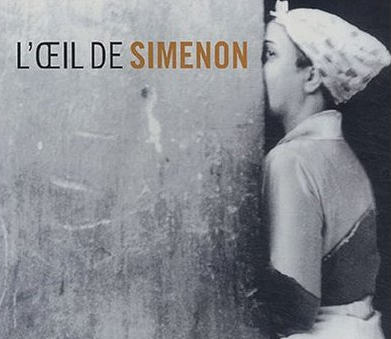
While I was in Paris I was lucky enough to stumble across the catalogue for an exhibition of photographs by writer Georges Simenon. It's beautifully reproduced so, as with many photography shows, I don't feel too badly to have missed the original event, which was held at the Jeu de Paume back in the spring of 2004.

The prurient side of you might like to see pictures of some of the 10,000 women he claimed to have slept with - and the book's cover sneakily alludes to that (pictured) - but this is a rather splendid collection of travel photos, held by the University of Liège's centre for Simenon studies. The pictures are taken over only a few years (1931-5) but cover a wealth of locations, from north and eastern Europe to Africa and north America.

Some are unavoidably snapshots - they can be of dubious quality - but many are very beautiful; as exacting as Simenon was with words, he seems to have had quite an eye. Pictures from Sudan and the Congo are reminiscent of old National Geographic spreads (bare-breasted women with young children tied to their backs, or bathing), and predate Leni Riefenstahl's similar ethnographic work, but his images of people in Poland and Russia match those of Sergei Prokudin-Gorskii for their humanity.

Simenon's pictures of Turkey and Tunisia are especially eye-catching, while those of Tahiti capture the expat world he depicted in such novels as Banana Tourist. It makes for a bleaker take than that of painter Paul Gauguin, currently on show at Tate Modern. (There is one topless beauty, sitting like Ady Fidelin in Lee Miller's photo of Roland Penrose, Man Ray and Co picnicking in Mougins.)

With his love of boating, there are many (shaky) images of harbours: Honfleur, Ouistreham, Concarneau, Boulogne, Marseille… (For the curious, Simenon's wife Tigy and her maid Boule are pictured onboard - he slept with both of them.) Best of all, though, are his pictures of the homeland he left, Belgium, many of customers or staff in bars in Charleroi (almost in the style of August Sander, also exhibited at Tate Modern at the moment), eerily quiet streets in the Flanders, even a haunting torn poster of a skull wearing a gas mask in Brussels. Simply stunning.

Friday, 1 October 2010

Miller time: Paris in Tropic of Cancer

'An eternal city, Paris! More eternal than Rome, more splendrous than Ninevah. The very navel of the world to which, like a blind and faltering idiot, one crawls back on hands and knees.' - Henry Miller, Tropic of Cancer

Before my little post on Maigret's Paris, a friend suggested I do something on Henry Miller and pointed me in the direction of Walking Paris with Henry Miller. I could never match that excellent site so instead thought simply to concentrate on Tropic of Cancer (1934), the best novel on the French capital I've read.

I was always under the impression that it's a dirty book, but it's not at all; it's joyful, exacting and very funny. The only possible danger to your health comes from its sturdy language; always one to enjoy dropping the c-bomb, a work that features the c-word at least once a page is an open invitation to me.

Inscribed by a C Branchini, I have a 1949 edition from the Obelisk Press - 'Must not be imported into England or USA' - busy with typographical errors, faded print and other faults that sometimes make it difficult to follow, but nonetheless. Full of knowledge and criticism, Tropic of Cancer builds into a philosophical diatribe which may outstay its welcome nowadays, but Miller quickly atones with two whirlwind tales to whisk you to the end.

All of Paris is here, from the bars of Montparnasse - the Café Select, the Dôme, La Coupole - through the Place St Sulpice, to the neighbourhood of the Folies Bergère in the 9th. Nearby is the Faubourg Montmartre, 'a devil's street… with its brass plates and rubber goods, the lights twinkling all night and sex running through the street like a sewer.'

The Café de l'Eléphant on the boulevard Beaumarchais, which runs north from Bastille, is where he picks up the lusty Germaine. It is an area ripe with whores: 'The Rue Pasteur-Wagner is one I recall in particular, corner of the Rue Amelot which hides behind the boulevard like a slumbering lizard. Here… there was always a cluster of vultures who croaked and flapped their dirty wings, who reached out with sharp talons and plucked you into a doorway. Jolly, rapacious devils who didn't even give you time to button your pants when it was over.'

On the Left Bank, 'the Rue de Buci [pictured] is alive, crawling. The bars wide open and the curbs lined with bicycles.' Otherwise he is 'wandering along the Seine at night, wandering and wandering, and going mad with the beauty of it.'

But Paris is not so easy to distill into one experience. His wife has returned to America and, walking down the Rue Lhomond one night, he recalls her plea to show her the Paris he has written about. Suddenly he realises 'the impossibility of ever revealing to her that Paris whose arrondissements are undefined, a Paris that has never existed except by virtue of my loneliness, my hunger for her. Such a huge Paris! It would take a lifetime to explore it again. This Paris, to which I alone had the key, hardly lends itself to a tour, even with the best of intentions; it is a Paris that has to be lived, that has to be experienced each day in a thousand different forms of torture, a Paris that grows inside you like a cancer, and grows and grows until you are eaten away by it.'

Monday, 13 September 2010

Maigret's Paris: a walk

Georges Simenon's books, as I've noted before, are so thick with atmosphere they almost serve in their own right as guides to the cities in which they're set. He's best on Paris, most notably in the novels dedicated to Chief Inspector Maigret. It would be the work of a lifetime to plot the locations from his books - and many are long gone, of course - but a few obvious sites stand out.

Start at 36 Quai des Orfèvres, the headquarters of the Police Judiciare and Maigret's base, on the Île de la Cité. (This wonderful Life article includes a photo of Simenon climbing the stairs there, in the mould of his hero - and what great ads.) Behind it, on the Place Dauphine, is the setting for the fictional Chez Paul, the bar to which Maigret used to send for beers and sandwiches in the midst of one of his night-long interrogations.

Heading north-east is the Place des Vosges, where both Simenon (from 1924, with wife Tigy) and Maigret lived for a time, and then there's 132 Boulevard Richard Lenoir, as iconic to fans of the French detective as London's 221b Baker Street to admirers of Sherlock Holmes. A market on Thursday and Sunday mornings makes for a characteristic diversion but film-lovers may be tempted to travel a bit further, up to the Canal St Martin, setting for a scene in Jean-Pierre Jeunet's whimsical Amelie (2001), and home to Hôtel du Nord, immortalised by Marcel Carné in 1938. You'll need lunch by now, and one of the many lovely cafés round here should serve just fine.

Monday, 28 June 2010

Paris memories

Summer has me thinking about Paris, and had me reading the latest book by Paul Auster, Invisible, which is partly set there. What caught me back for a moment is that the main character, student Adam Walker, settles into the streets I've always seen as my favourite in the city, from when I too was a student.

Walker books himself into a decrepit, crumbling hotel 'on the rue Mazarine in the sixth arrondissement, not far from the Odéon metro station on the Boulevard Saint-Germain'. The Hôtel du Sud is 'a historic structure, erected in the seventeenth century, he thinks ,' much like the place I love to stay when I visit. Another Invisible character lives in a chambre de bonne, as a friend did overlooking the Danton on carrefour de l'Odéon.

Soon, Walker is to be found 'sitting at an outdoor café on the place Saint-André des Arts, nursing a glass of beer and writing in a small notebook. It is six o'clock in the evening, the end of another workday and now that Walker has begun to settle into the rhythms of Paris, he understands that this is probably the city's most inspiriting hour...'

I'm not sure about this word 'inspiriting' - however, as is typical with Auster, it turns out that some of the narrative is a fiction, within fiction, 'but Paris is Paris. Paris alone is real.'